At CucinaLuca, every dish tells a story of love, tradition, and authentic Italian flavors. Step inside and let the warmth of our kitchen and the aroma of fresh pasta make you feel right at home. Buon appetito!
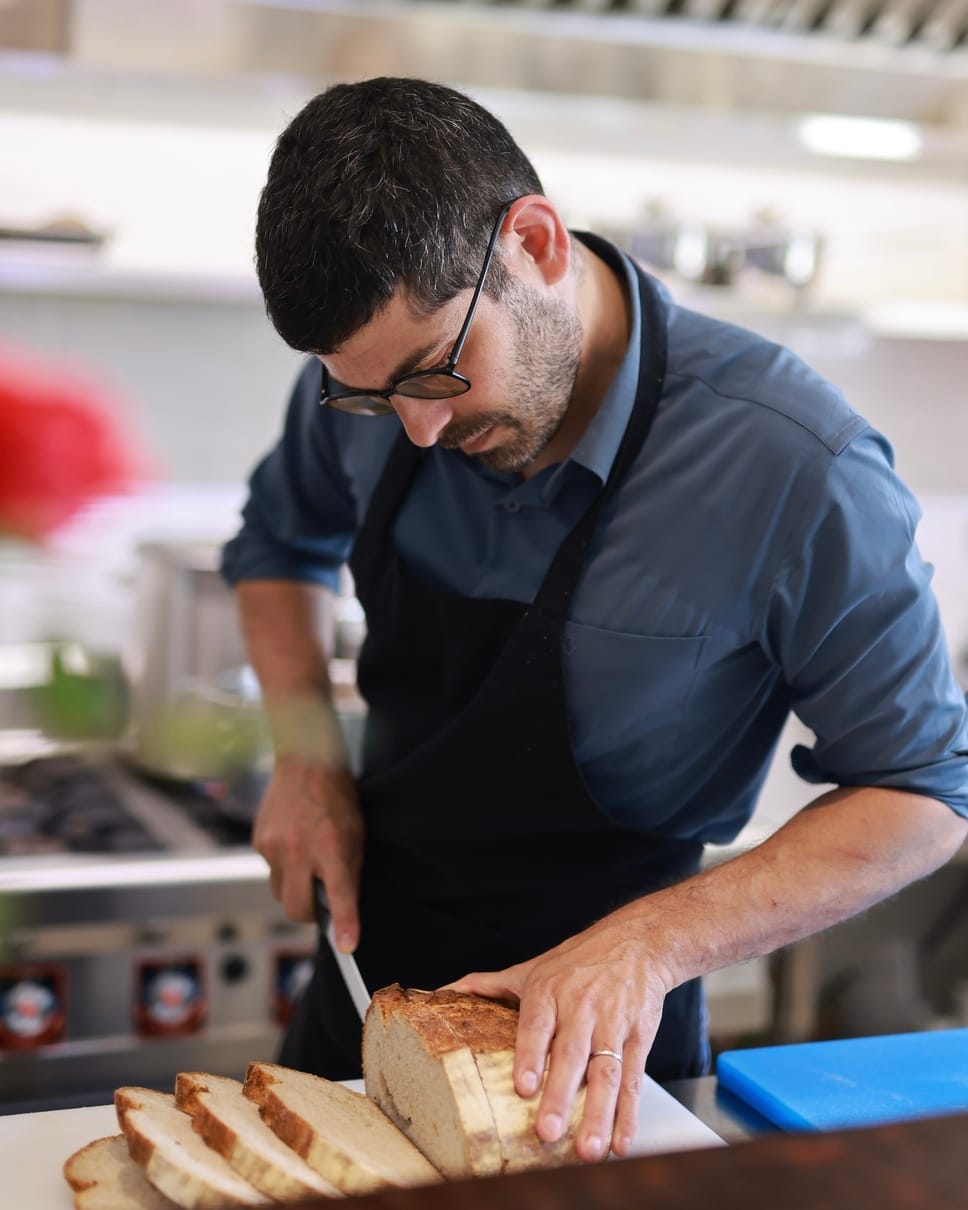
Luca FecarottaHi, I’m Luca Fecarotta, founder and head chef of Cucina Luca Italian Restaurant. I’ve been living in Da Nang for 6 years, exploring every corner of this beautiful coastal city. Over time, I’ve fallen in love with its local culture, vibrant cuisine, stunning beaches, and the warm, welcoming spirit of the people who call it home.
Visitors to Da Nang often confuse the two “countdowns” of the year: Western New Year’s Eve and Lunar New Year’s Eve. While Western New Year is typically marked by big parties, loud music, stages, and public countdowns, Lunar New Year (Tết), especially Giao Thừa, the midnight moment that welcomes the new lunar year, feels very different.
In Da Nang, Tết Eve is generally quieter and more meaningful, shaped by family traditions and small public moments rather than large street celebrations. This guide highlights what travelers can do and expect in Da Nang during Lunar New Year 2026.
What Does “Countdown” Mean in Vietnam? Western New Year vs Lunar New Year
In Vietnam, the word “countdown” usually refers to Western New Year’s Eve on 31 December. That night is typically marked by concerts, big stages, artist line-ups, and loud public celebrations in city centers.
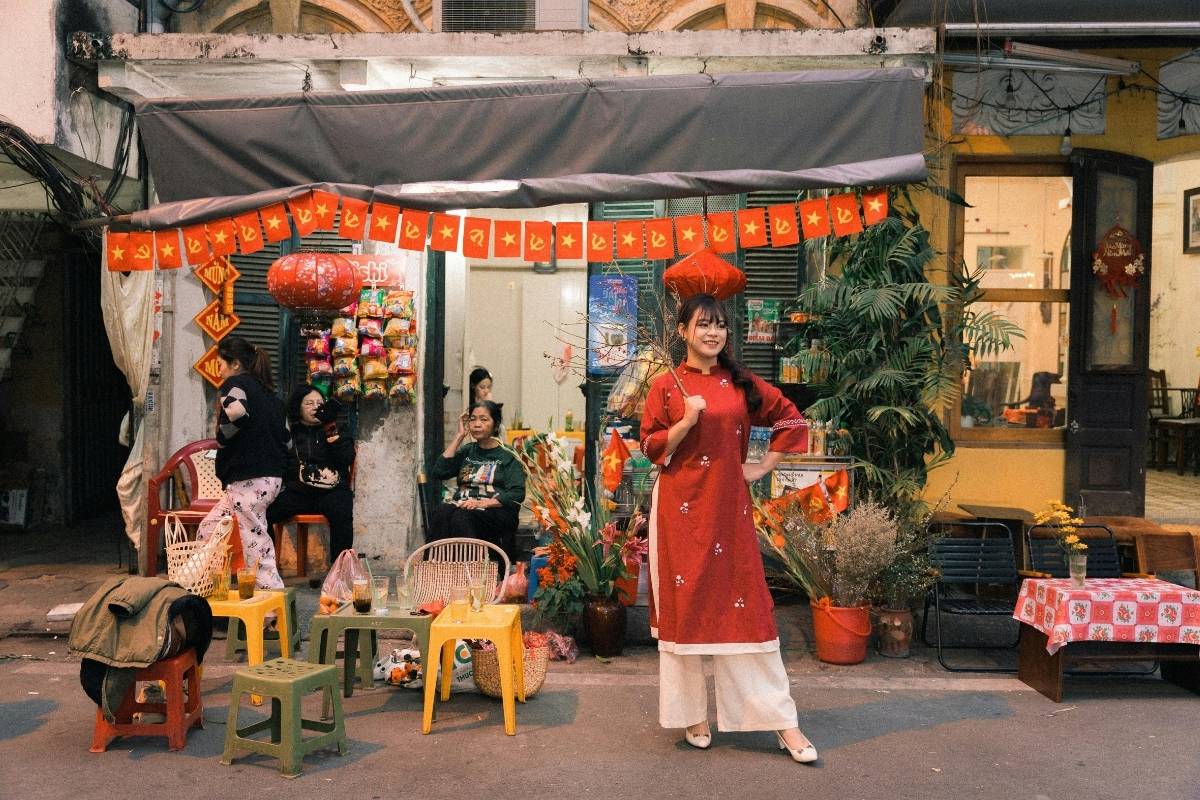
Lunar New Year’s Eve, known in Vietnamese as Giao Thừa, follows a different rhythm. The “Tết countdown” is more symbolic than performative: families gather at home, and many households prepare the mâm cỗ and offer prayers at the ancestor altar. Public activities may still take place, but they are secondary, meant to complement the holiday atmosphere rather than dominate it. During this time, people mostly focus on being together.
In Da Nang, Tết night feels calm, reflective, and family-centered. Understanding this contrast helps visitors set the right expectations for the Vietnamese New Year “countdown.”
When Is Giao Thừa in Da Nang 2026?
Lunar New Year’s Eve (Giao Thừa) falls on the night of 16 February 2026. At midnight, the old lunar year ends and the new one begins. Families light incense, offer prayers, and mark the transition quietly at home or nearby pagodas.
This moment is not centered on stages or performers. There is no public clock counting down. The meaning comes from timing and intention. For visitors, the experience is about being present as the city collectively crosses into the new year.
Watching Lunar New Year’s Eve 2026 Fireworks in Da Nang
Location: Six official fireworks sites across Da Nang
Area near Hoa Khanh Ward People’s Committee
Bach Dang Street along the Han River, near Binh Minh 6 Street
Western Ring Road resettlement area, Hoa Vang District
Hoi An Park Square, Tran Hung Dao Street
March 29 Square, Hung Vuong Street
Nui Thanh District public square
Time: 12:00 AM, 17 February 2026
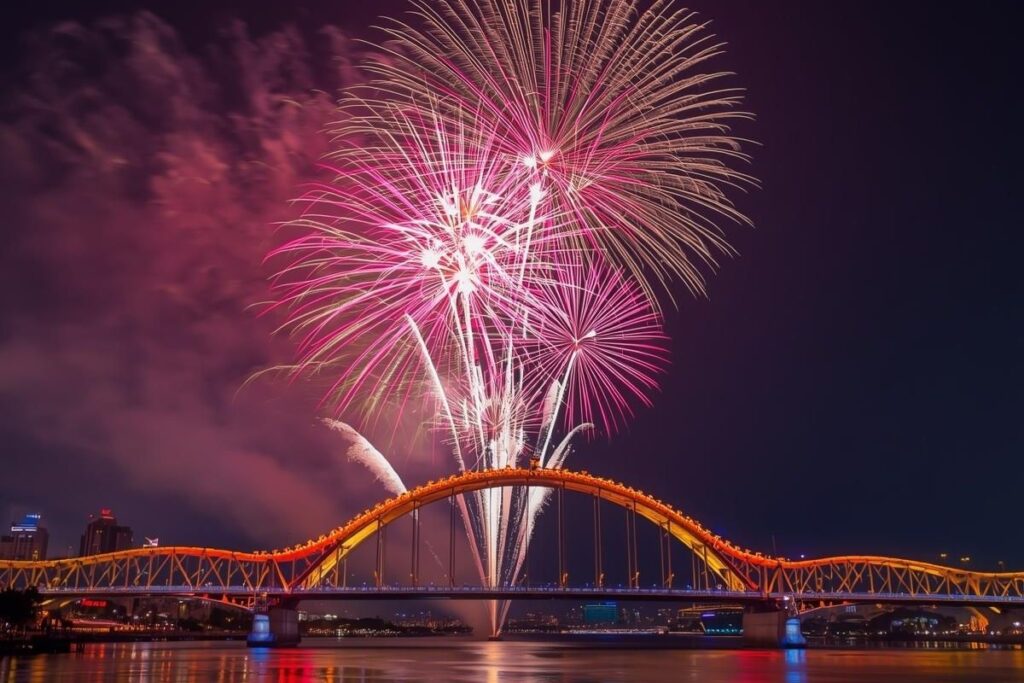
At the exact moment the Lunar New Year begins, fireworks launch simultaneously across the city and nearby Hoi An. The display is short but meaningful, marking renewal, good fortune, and shared hope.
For visitors, watching the fireworks is the clearest public expression of Tet. Standing among families under the same sky offers insight into how Vietnamese people welcome the new year together.
Attending Lunar New Year’s Eve Art Performances
Location: East Bank of Dragon Bridge Park, Tran Hung Dao Street, An Hai Ward
Time: Evening of 16 February 2026 into early 17 February
These Lunar New Year’s Eve art performances take place before the fireworks and shape the emotional tone of Tet night. Music, dance, and traditional elements reflect how locals gather in public spaces before returning home for family rituals.
As midnight approaches, the host announces the arrival of the new year. This cue leads directly into the fireworks, creating a smooth transition from shared performance to collective countdown.
Exploring Tet Decorations, Flower Streets, and Public Displays
Location: Bach Dang Street, Tran Phu Street, APEC Park, and central riverside areas
Date: 1 – 16 February 2026
In the weeks before Tet, Da Nang fills with flower streets and seasonal displays. Kumquat trees and chrysanthemums create a relaxed spring atmosphere rather than a staged festival setting.
On Lunar New Year’s Eve, many flower markets remain open. As midnight approaches, prices often drop. Buying a small plant or Tet ornament becomes a simple, local way to experience the evening before heading toward the fireworks.
Listening to Bai Choi Folk Singing
Location: Folk performance space on the southern side of East Bank of Dragon Bridge, Tran Hung Dao Street
Date: 16 – 19 February 2026
Bai Choi is a traditional folk singing and storytelling form from Central Vietnam. Performances are open, humorous, and interactive, using local dialects and everyday stories.
For visitors, listening to Bai Choi during Tet reveals the communal side of the Vietnamese Lunar New Year. The experience feels informal and welcoming, reflecting shared joy rather than formal spectacle.
Playing Traditional Bai Choi Folk Games
Location: An Hoi Roundabout, Hoi An Ward
Date: 16 – 19 February 2026
Here, Bai Choi appears as a folk game rather than a stage performance. Players gather around small huts while performers sing and call out verses.
For visitors, joining a Bai Choi game turns observation into participation. The atmosphere is lively, lighthearted, and especially engaging during Tet, making it one of the most approachable cultural activities of the holiday.
Time: After midnight, approximately 12:15 – 1:00 AM
Visiting a pagoda after Giao Thừa is a long-standing Tet tradition. Families pray for peace, health, and good fortune.
For visitors, this moment is best approached quietly. Modest clothing, lowered voices, and respectful movement are essential. Observing this ritual offers rare insight into the spiritual beginning of the Vietnamese New Year.
After Giao Thừa, if you’re staying in Da Nang, there are still plenty of Tết activities you can experience as the city slowly returns to its normal rhythm. Over the next few days, more places reopen and the atmosphere becomes livelier, making it a good time to explore at a comfortable pace.
Tips for Experiencing Lunar New Year’s Eve Fireworks in Da Nang
Plan transport early (and have a “return plan”): After midnight, taxis and ride-hailing are harder to find because many drivers go home for Tết and traffic is often managed around fireworks areas. If you’re staying close to the riverfront, the simplest option is to walk both ways. If you’re farther out, consider pre-booking a taxi: arranging pickup through your hotel, or setting a clear pickup point a few streets away from the busiest area.
Arrive early to get a comfortable place: Good spots along the river fill up well before midnight. Arriving early lets you choose a place where you can actually stand or sit comfortably—especially if you’re traveling with kids or older family members. Once the crowd thickens, movement becomes slow and it’s harder to reposition.
Expect big crowds—but a calm, family atmosphere: The mood on Tết Eve is usually relaxed and respectful. You’ll see families, couples, and groups of friends quietly waiting rather than cheering or partying. Give people space, follow the crowd flow, and keep your voice and music low, especially in residential areas.
Follow traffic control and safety instructions: Roads may be closed and traffic paused near the riverfront. Stick to designated pedestrian areas and avoid standing too close to moving vehicles or blocked junctions. If you’re unsure, ask hotel staff which route is easiest that night.
Welcoming the New Year the Da Nang Way
Many restaurants adjust their opening hours during Tết, particularly on Lunar New Year’s Eve and the first days of the holiday. If you plan to dine out, confirming holiday trading hours before travelling is recommended.
Located in An Thuong, Cucina Luca serves handmade pasta and seasonal Italian dishes whenever regular or holiday service is available. The latest opening hours and reservation information are available through the restaurant’s contact page.